
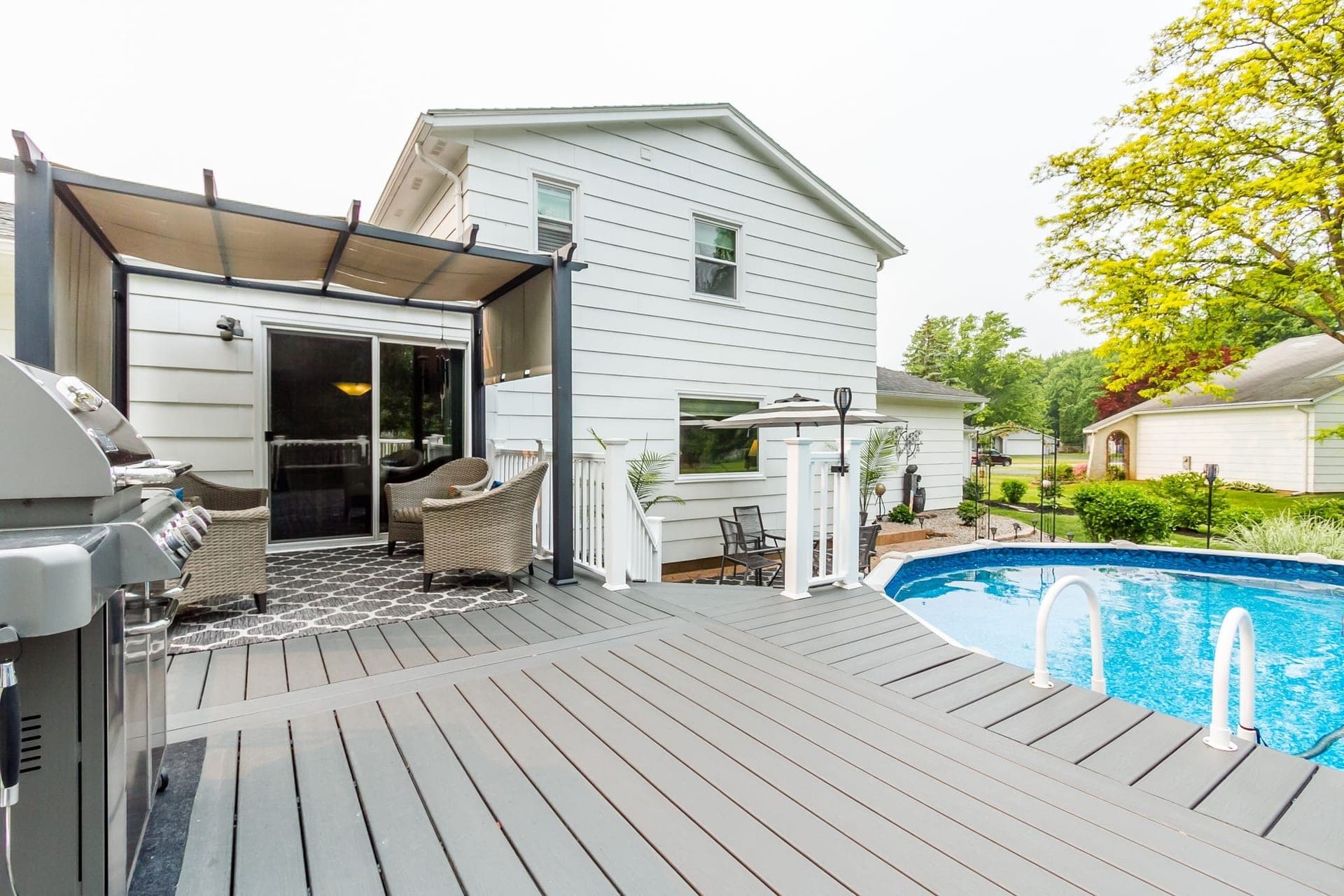
TL;DR: A pergola gives you filtered shade, costs less, and works best attached to the house over an existing patio or deck. A gazebo gives you a real roof, full rain protection, and a destination spot out in the yard. Around Rock Hill and Fort Mill, the right choice depends on where your sun hits, how you plan to use the space, and which materials can handle our summers.
The Real Difference: Filtered Shade vs. a Roof
People use these words loosely, so let's set the terms. A pergola is an open frame: posts, beams, and a top layer of rafters or slats. It breaks up sunlight but does not stop rain unless you add a cover. A gazebo is a freestanding structure with a solid roof, usually shingled or metal, often with a raised floor and optional screens.
That one difference drives almost everything else. A gazebo is closer to a small building. A pergola is closer to a really nice frame for your outdoor space. Neither one is better in general. Each one is better for a specific yard.
Start With the Sun, Not the Catalog
Most homeowners pick from photos. We start by asking where the sun is when you actually want to sit outside.
How the summer sun moves here
In the Charlotte metro in June and July, the midday sun is nearly straight overhead. By late afternoon it drops low in the west and northwest, and that is when patios get unbearable. A west facing patio in a Fort Mill or Indian Land subdivision can feel like an oven from 4 p.m. until sunset, which is exactly when you get home from work.
Here is the catch: no overhead structure, pergola or gazebo, blocks low evening sun very well. Sun coming in at a low angle slides right under the roofline. If your problem is late day western sun, plan on adding a privacy screen, roll down shades, or plantings on that side regardless of which structure you choose.
Orienting a pergola for real shade
If you go with a pergola, the direction of the top slats matters more than most builders admit. We generally run the top layer north to south. That way the faces of the slats catch the morning and afternoon sun coming from the east and west, which throws a lot more shade during the hours you are likely to be outside. Deeper, more closely spaced slats help too. A 2x2 top layer on wide spacing looks nice in a rendering and does very little in July.
When a roof is the only answer
If you want to sit outside at noon, during a pop up summer thunderstorm, or during the pollen dump every April, open slats will not cut it. That is where a gazebo earns its cost. You can also get there with a pergola by adding a polycarbonate panel roof or a louvered aluminum system, but at that point you are spending gazebo money for a different look.
Attached or Freestanding?
Attached pergolas
This is where pergolas shine. Bolting a pergola to the house with a properly flashed ledger board extends your living space right off the back door, over a patio or deck you already have. It feels like part of the house instead of an afterthought. The flashing detail is critical. A poorly attached ledger is one of the most common sources of rot and water intrusion we see when we replace siding, so this is not a weekend DIY step.
Freestanding gazebos and pergolas
Gazebos are almost always freestanding, and they work best as a destination: by a fire pit, near the pool, or at the edge of a lake lot in Lake Wylie or Tega Cay where you want a view. Freestanding structures need solid footings. Our Carolina red clay holds water, expands, and shifts, so we pour concrete piers and use raised post bases rather than burying wood posts directly in concrete, which traps moisture and rots them from the inside. Anchoring also matters. Tropical storm remnants roll through every hurricane season, and a solid gazebo roof catches a lot of wind.
Permits and HOAs
In York County and inside Rock Hill city limits, attached structures and larger freestanding ones typically require a building permit and inspections, and setback rules can limit where a gazebo can sit on your lot. If you live in an HOA community like Baxter Village or many of the neighborhoods in Tega Cay, expect an architectural review submission before any work starts. We handle permit applications for our projects, but it is worth checking your HOA covenants early because some restrict roof materials or colors.
Material Choices That Hold Up in Carolina Humidity
Pressure treated pine
The budget option. It is strong and paints or stains well, but it checks, cracks, and twists as it dries out in our humid summers. Plan on sealing it every couple of years.
Cedar
Naturally rot resistant, more stable than pine, and it looks great. It costs more and still needs periodic sealing if you want to keep the warm color instead of letting it gray.
Aluminum and vinyl
Low maintenance and increasingly popular, especially louvered aluminum pergolas that let you open and close the roof. Vinyl holds up well against moisture but can look a bit plain on smaller frames. Both are worth considering if you never want to pick up a stain brush again.
Gazebo roofing
Architectural shingles that match your house look the most integrated. Standing seam metal costs more up front but sheds pine needles and pollen better and handles wind and heavy rain well.
Our Take
If you want shade over an existing patio or deck right off the house, get a pergola, oriented correctly and built with deep slats. If you want a true outdoor room out in the yard that keeps you dry and can be screened against mosquitoes, get a gazebo. If you want both rain protection and the attached look, a louvered aluminum pergola or a screened porch might be the better fit.
Before you decide, go sit where you are picturing the structure at 5 p.m. on a sunny day and notice where the sun hits you. Snap a few photos, and if you want a second set of eyes, we are happy to walk your yard, talk through sun exposure and HOA requirements, and show you material samples so you can compare options side by side.